
mRNA therapeutics and the future of rare disease treatments
Treating the thousands of known rare genetic diseases is still an unmet challenge, with many such diseases still having ‘orphan’ designation meaning that no viable options are available for their treatment. mRNA Therapeutics will likely offer treatment options for some, if not many, of these diseases, but ongoing research is required to bring mRNA-based rare disease treatments into the clinic.
What are rare and orphan diseases?
Some aspects of the societal impact of diseases can be measured via the number of affected patients (the disease incidence). For example, the incidence for the common cold is almost 100% (most people catch a cold at least once a year), whereas the incidence of Influenza is lower at 5-10% per year in most years. Rare diseases have much lower incidence rates than this - in the UK and EU they are defined as affecting fewer than 1 in 2000 people over a lifetime. Ultra rare diseases affect fewer than 1 in 50,000 people. Where rare diseases have no available medical treatments, they are also often termed ‘orphan diseases’.
How do rare diseases occur?
Some rare diseases, such as the sporadic form of Creutzfeld-Jacob Disease, appear to occur simply because of incredible bad luck - there is no causal biological fault in patients, rather the disease is caused by random biological fluctuations. However, most rare and ultra-rare diseases have genetic causes, meaning they are caused by specific mutations in one of our genes that renders that gene non-functional. Some of these mutations are present in the general population but do not cause symptoms because they occur in only one of two gene copies present in our adult cells, and the intact gene copy is sufficient to maintain health. However, on the rare occasion that a baby inherits two non-functioning copies of the gene from its parents the disease becomes active. Other mutations are not present in the general population, instead they occur because a new mutation was introduced during germ cell development in a parent, or early on during the baby’s own development.
If diseases are rare, why should we care?
Every patient has the right to our best effort for treating their disease (whether that disease is rare or not). Moreover, rare diseases are only individually rare but collectively common: around 7000 rare diseases are currently recognised, and there are almost certainly still unknown diseases out there. This number is so high because human cells contain 19-20,000 distinct protein-coding genes, any one of which can be rendered non-functional by mutations. In consequence, more than 3.5 million people in the UK alone are living with a rare disease, and together these conditions represent one of the greatest areas of unmet medical need. Many rare disease patents wait years for a diagnosis, and most will have no access to approved treatments.
How are mRNA Treatments relevant to rare diseases?
In some rare diseases the causal genetic defects can be corrected with small molecules (the most established treatment modality used in the clinic). For example, Cystic Fibrosis is caused by genetic defects in a gene encoding a membrane channel in lung epithelial cells, leading to serious lung damage. Some versions of cystic fibrosis can be treated using small molecules that bind to the non-functioning membrane channels and restore their function. However, such approaches are not feasible for most rare diseases.
Modern gene therapy makes it possible to introduce artificial copies of genes, which confer normal gene function, into patient cells. Where this approach works, gene therapy is the current gold standard for the treatment of rare diseases, but gene therapy procedures are harsh for patients and have significant side effects. Recent clinical trials for gene therapies for rare diseases were unfortunately affected by patient deaths due to severe innate and adaptive immune responses, acute organ failure, and systemic toxicity.
Thus treatment options for rare diseases are currently limited. Recognising these limitations, the UK Government introduced the UK Rare Diseases Framework to improve outcomes for people living with rare diseases.
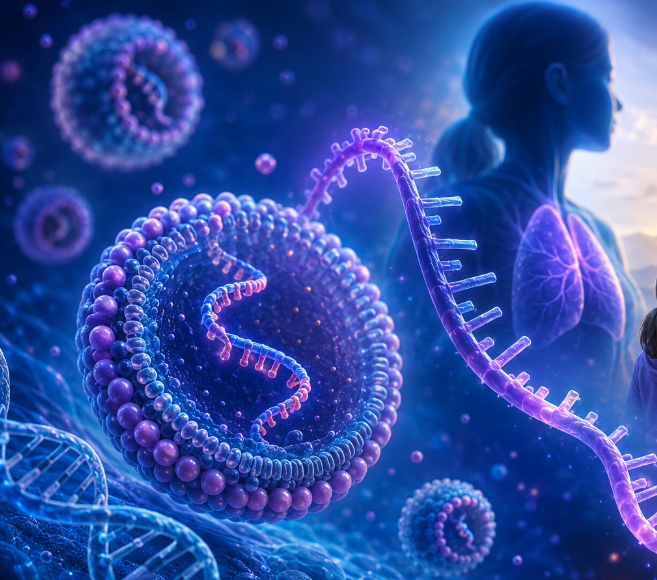
In vitro-transcribed RNAs that contain the normal, functioning gene sequence, can be formulated and delivered to patient tissues where their presence can override the patient’s non-functioning gene: thus mRNAs constitute another, novel treatment modality for rare diseases with genetic causes. Administrating mRNAs to patients has much fewer and less severe side effects compared to gene therapy (the high general safety of the COVID19 vaccines has demonstrated this), but it comes with the trade off that expression is only temporary until the administered RNA decays. mRNA treatments typically exert their effects for days to months depending on the chosen RNA format - in contrast, the DNA genes used in gene therapy are permanently incorporated into a patient’s genome. Thus, therapeutic mRNAs for the treatment of rare diseases need to be administered regularly for as long as the therapeutic effect needs to persist.
What are the challenges for mRNA Therapeutics development for rare diseases?
In order to effectively replace the missing protein in specific rare diseases, mRNA Therapeutics must deliver their encoded protein in an active form, for as long as possible, at the right level (ie sufficient to cause therapeutic effects, but not so much that excess protein interferes with other biological processes). Where exactly the sweet spot is for these different requirements will be different for each of the treated diseases, and designing successful rare disease therapeutics therefore requires a tailored test program in which candidate mRNAs with differing properties (such as different regulatory sequences, protein-coding regions with differing activity, different structural features that confer differing stability) are explored for their suitability. Another challenge is that mRNAs need to be delivered to the correct target tissue or tissues in the patient - which is any tissue in which the missing protein is required for cell health.
How does Jantomarna support rare disease drug development?
Our proprietary mRNA design platform combines computational biology and advanced optimisation algorithms to generate mRNA sequences that are tailored for efficacy, safety and manufacturability. One of the strengths of our platform is that it predicts activity levels and the duration of therapeutic efficacy, meaning that we need to perform less experimental work when we scout for mRNA sequences that show the right combination of properties. This both accelerates the development process and reduces development costs. By combining decades of expertise in RNA biology with computational modelling, Jantomarna helps to unlock the full potential of mRNA therapeutics for rare diseases and other areas of significant unmet medical need.
About the authors
Tobias von der Haar is Professor of Systems Biology at the University of Kent, and CEO and one of four co-founders of Jantomarna Therapeutics. Tobias has combined computational and experimental approaches for studying mRNA Biology since the beginning of his PhD in 1995.
Diala Nikolaeva is Customer Relations Manager at Jantomarna Therapeutics, where she supports the company's commercial engagement activities. Alongside her industry role, she conducts research in Business Analytics with a focus on healthcare, exploring how data-driven decision-making, strategic planning, and operational optimisation can improve healthcare delivery, identify opportunities for greater efficiency, reduce costs, and ultimately improve patient outcomes.
About the company
Jantomarna Therapeutics Limited is a private company limited by law registered in the UK with company number 16717863. Jantomarna’s mission is to harness the long-standing track records of its founders in mRNA Biology and Immunology for the design of mRNA Therapeutics with superior efficacy, patient safety, and manufacturability. We offer contract design of therapeutic sequences, co-development of therapeutics, and licensing of our design software. If you are interested in mRNA Therapeutics design contact us at info@jantomarna.co.uk .